
Hot Roofs Gone Wrong
And how to fix them, once, the right way, for the next 100 years.
If you're on this page, there's a good chance your roof has a problem. Maybe the plywood is wet. Maybe there's mold, mildew or rot. Maybe you've got four-foot icicles and a heating bill nobody can explain. It's probably a mess.
I want you to hear this first. There is hope. I've walked a lot of these roofs, and a mess can be fixed. Find the cause, fix the cause, and that roof can take care of your family for the next 100 years.
This page is just getting started. I have a lot more hot roof photos and stories, and I'm adding them as fast as I can. Check back soon.
What is a hot roof?
A hot roof is a roof where the insulation goes right up against the bottom of the roof deck, usually spray foam. There's no attic air space to carry heat and moisture away. Done right, it can work. Done wrong, it traps water where you can't see it.
Why so many of them fail
Warm, wet air rises. Cooking, showers, even breathing puts water in the air, and that air goes up until it finds the roof. If it gets trapped there, the wood soaks it up. Foam alone isn't a moisture management system.
Houses don't fail fast. They fail slow. From the floor everything looks fine. By the time you see it, it's usually been going on for years.
No two hot roofs are ever alike
This is the most important thing on this page. In a retrofit or remodel, every hot roof needs a lot more detail. No two are ever alike, and I've never fixed two the same way.
A lot of hot roofs have been done wrong, and not by bad people. One of the biggest ones I've been involved in was designed by an architect. Six years later, there was wet, rotted plywood on that roof. Once a roof gets that far, figuring out the solution is harder than doing the fix. That's why we always find out what the roof is telling us first.
A word about mold
I'm not a mold remediation guy. If you have mold, get a mold professional to clean it up. What I know is how to keep a roof or a wall from getting wet in the first place. The mold and the rot are not the problem. They're the evidence. Control the moisture in the house, and mold has no place to grow.
A Real Job: A Hot Roof That Went Wrong
An architect tried to stop the ice dams with a hot roof: closed cell foam sprayed on the bottom side of the roof deck. But nobody fixed the heat getting out through all the framing. Six years later they still had four-foot icicles, heat tape on the roof, and $500 a month every winter. That is when they called me, and Carbonless designed the fix: the Roof Lung.
Look at the frost photos. Before the Roof Lung, you can see every truss in the frost. That's heat getting out of the house. After the Roof Lung, you can't see the trusses anymore. No snow yet this year, so that's our first after photo. More coming this winter.
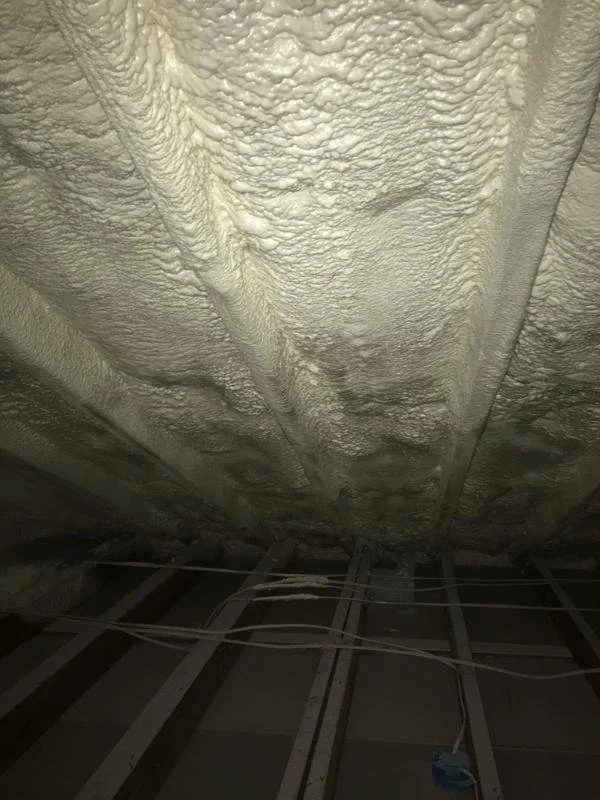
The hot roof. Closed cell foam on the bottom side of the roof deck. The framing still leaks heat.
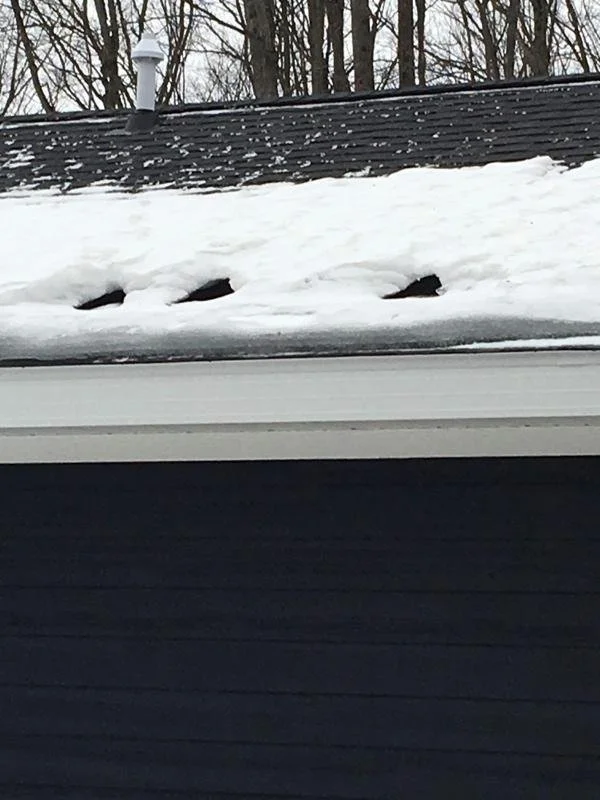
Snow melting from underneath. Heat getting out of the house.
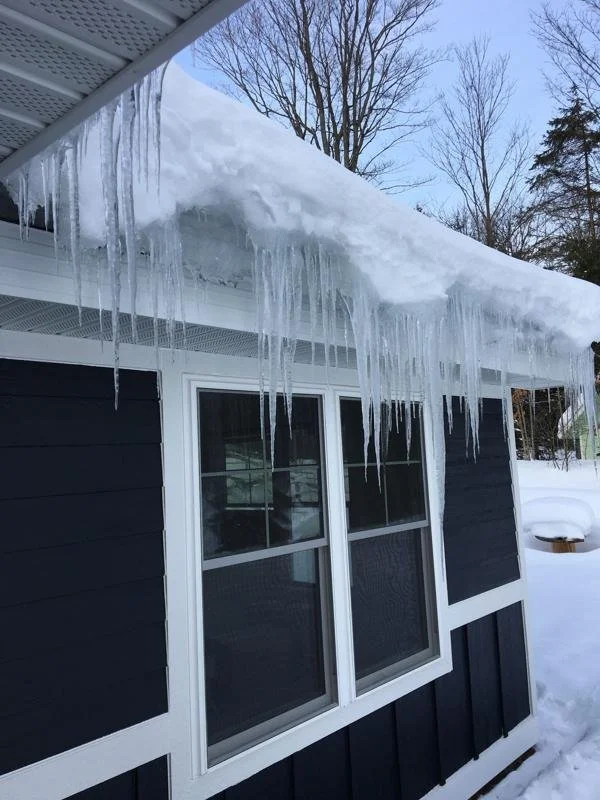
Four-foot icicles over the windows, every winter.
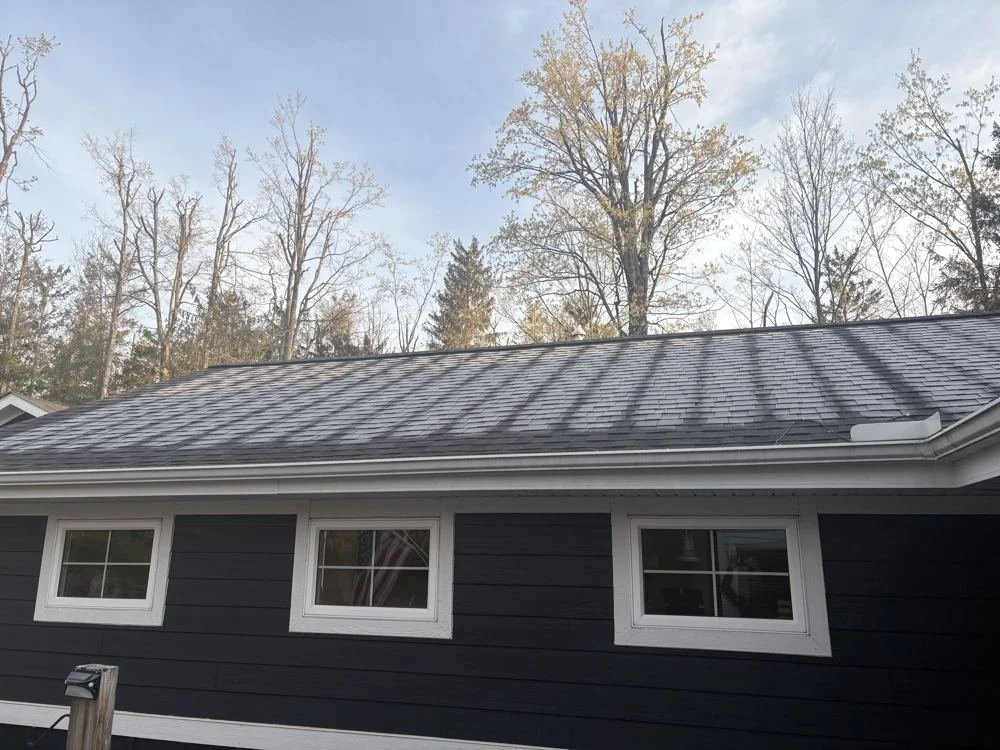
Before the Roof Lung. You can see every truss in the frost. That is heat getting out of the house.
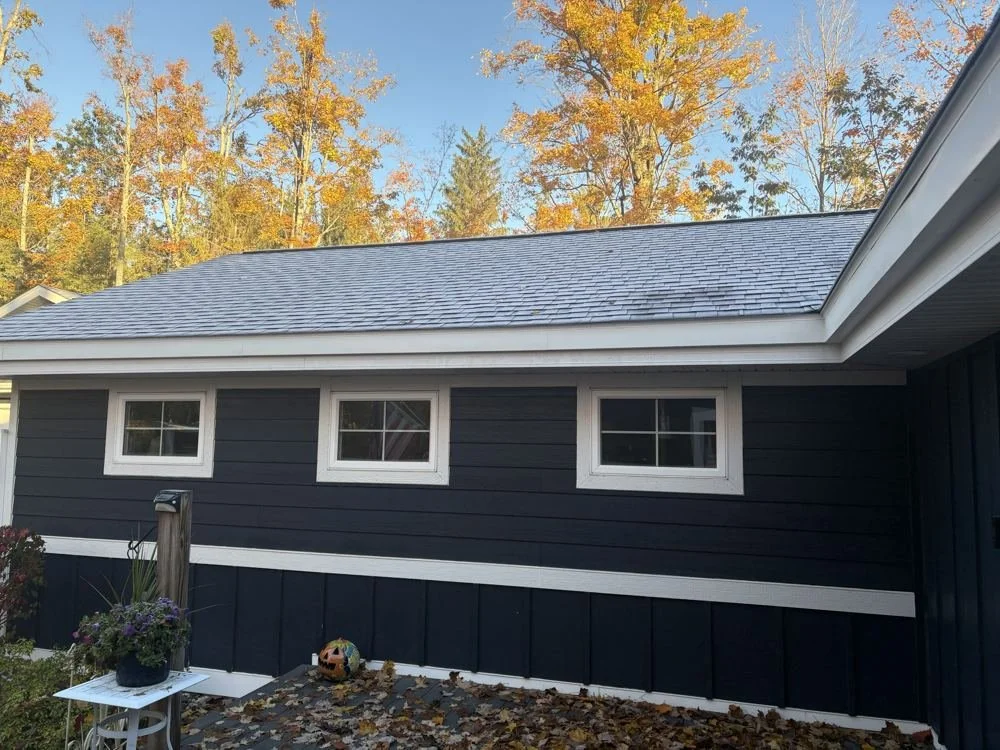
After the Roof Lung. You can't see the trusses anymore. The heat stays in the house where it belongs.
A Real Job: A Mountain Home Built in 1988
It looked like a beautiful house.
The roof is SIP panels made with beadboard foam, not the rigid insulation we use today. From the floor, that wood ceiling looks perfect. Then you look up close.
The roof leaked. And there is tar paper on the inside and tar paper on the outside, so the foam is in a sandwich with no escape hatch for moisture. Add the moisture people make just living in a house, cooking and showers, and from what I saw, the beadboard soaked it up. Now the top four feet of each side of the roof has gone wrong.
Houses don't fail fast. They fail slow.
It's a second home and the owners aren't there often. Nobody looks up. My best read is that sometime while they were gone, the foam reached its saturation point and started to fail. We still need moisture readings to confirm it. Now there's mold, mildew and a little rot.
The repair I would recommend: open the roof at the peak and repair it, then put the Carbonless Roof Lung System over the top and finish with a metal roof. That's how I would fix this one, once the testing confirms what we're looking at.
The vent tells another story. The air conditioning blows air out at about 55 degrees, and it was 70% humidity inside the house. When that cold metal meets damp air, you hit the dew point, and water forms right on the vent boot. That's most likely what feeds the mold around it. What I would recommend: two dehumidifiers, one on the second floor and one in the basement, plus a two-stage furnace to keep the air moving.
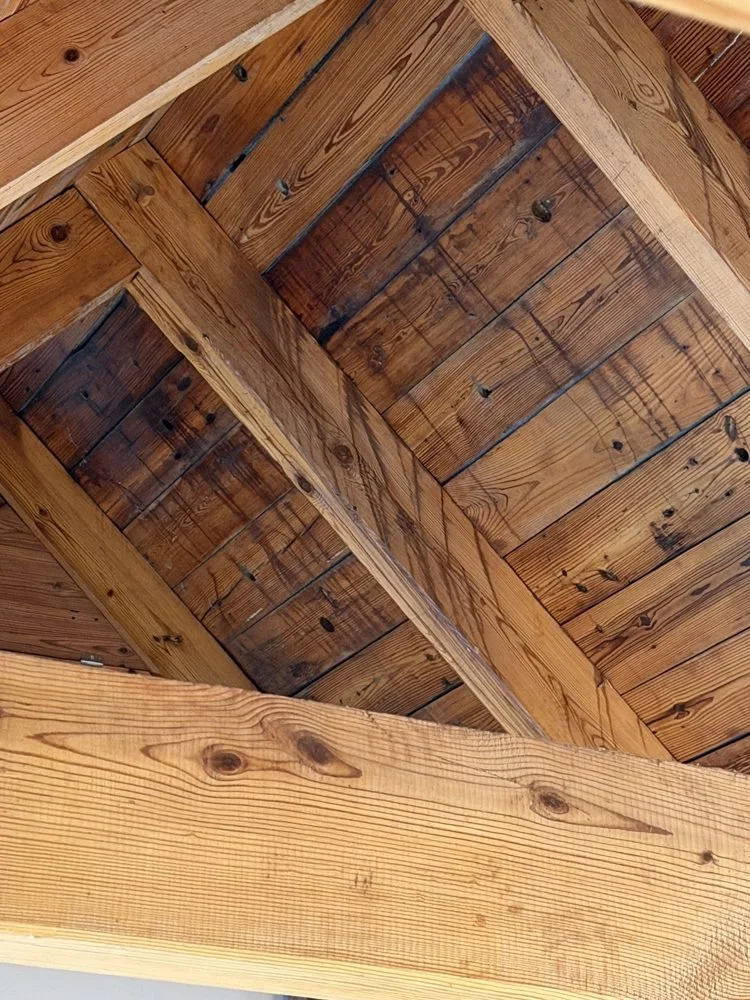
Built in 1988. From the floor, that wood ceiling looks perfect.
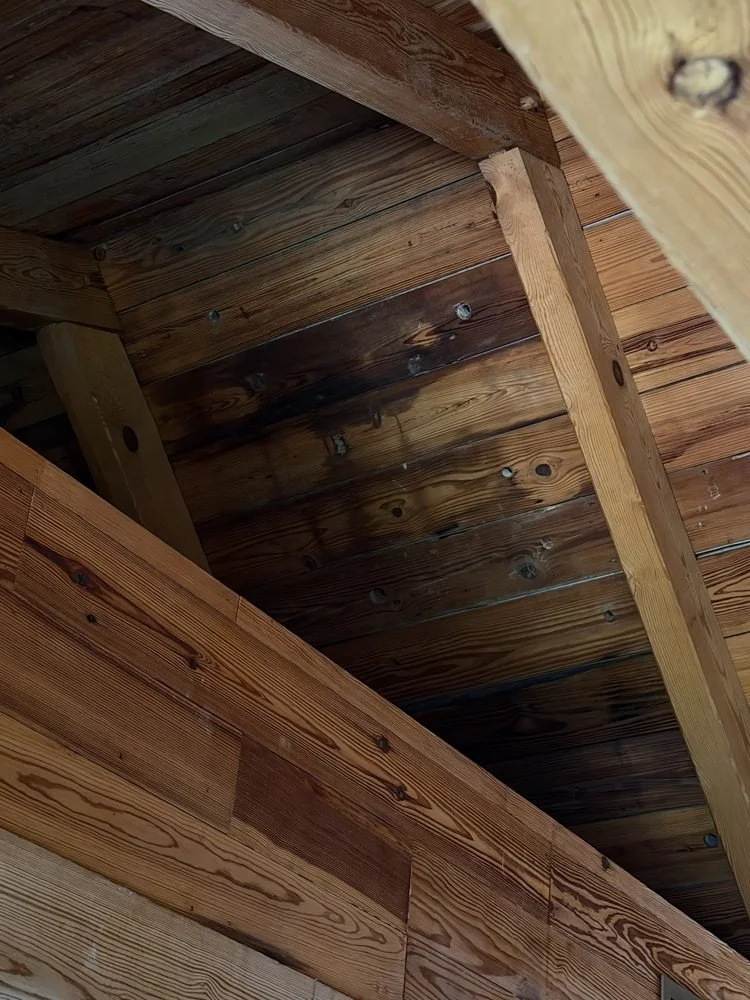
Then you look up close. Dark water stains on the ceiling boards.
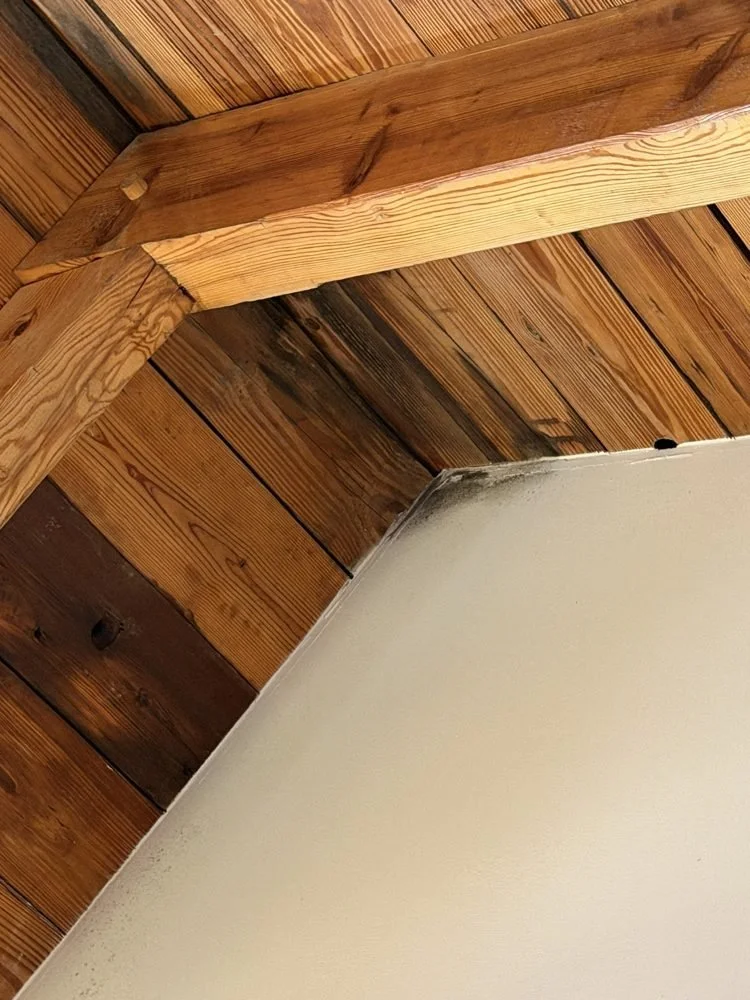
Mold at the corner where the wall meets the wood ceiling.
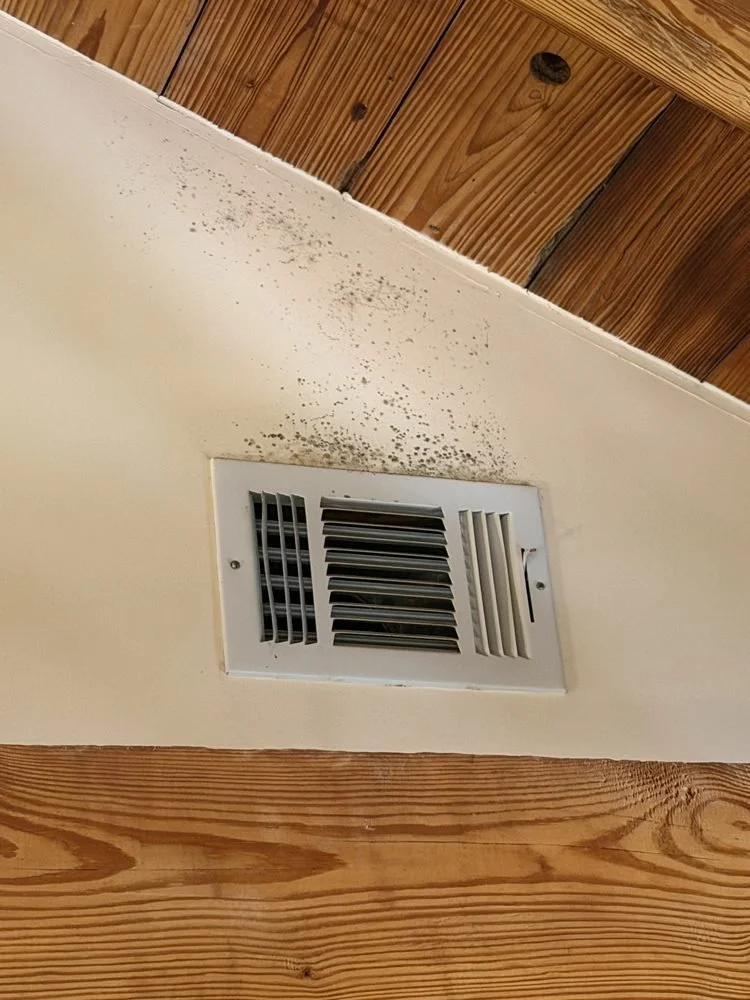
The vent tells another story. 55-degree air meets 70% humidity, hits the dew point, and water forms right on the vent.
The Fix: The Carbonless Roof Lung System
Keep Mother Nature off your roof, and she can't preheat your house.
Europe calls it a cold roof. I call it the Roof Lung, because it lets the roof breathe. Air moves between your roof and your insulation and carries the heat and moisture away before it ever gets in. No fans. No power. DrainStrip holds the air gap open, and the air moves on its own.
Summer, 2 p.m. in the afternoon. The sun had been beating on that roof for about 4 hours. The shingles hit 141°. The ZIP wall in the sun: 109°. The bottom of the sheathing, under the Roof Lung: 93° to 99°. We took about 46 degrees off the roof temperature, and the attic space stayed comfortable. Checked with an infrared thermometer. Those are the photos below.
Now, I'm not going to oversell it. That house was still under construction, and that was July, not August. You won't take that much off every day. If it's hot out, it's going to be hot out. But if you keep Mother Nature off that roof, she can't preheat the envelope. That's how this works. The photos speak for themselves.
And here's the question nobody asks before the foam goes up. If you spray foam right up against your metal roof, what happens when that metal wears out someday? With the Roof Lung, the old metal comes off and the new metal goes on without ripping out the insulation. That's the difference between a roof built for one owner and a roof built to last 250 years.
I don't just teach this. I live in it. My house runs at 45% relative humidity, in Georgia.
I invented DrainStrip, but a separate company owns it now. I hold no shares and get nothing from its sales. I use it because it works.
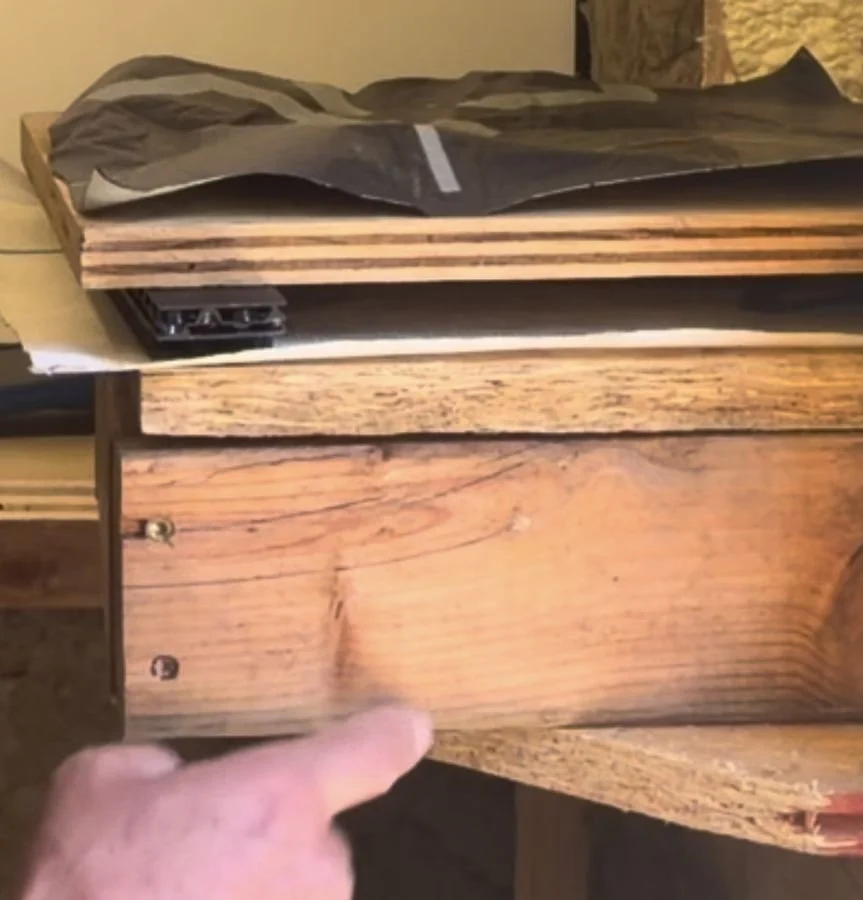
The cutaway: roof deck, the air gap held open by DrainStrip, then a new nail base and underlayment on top.
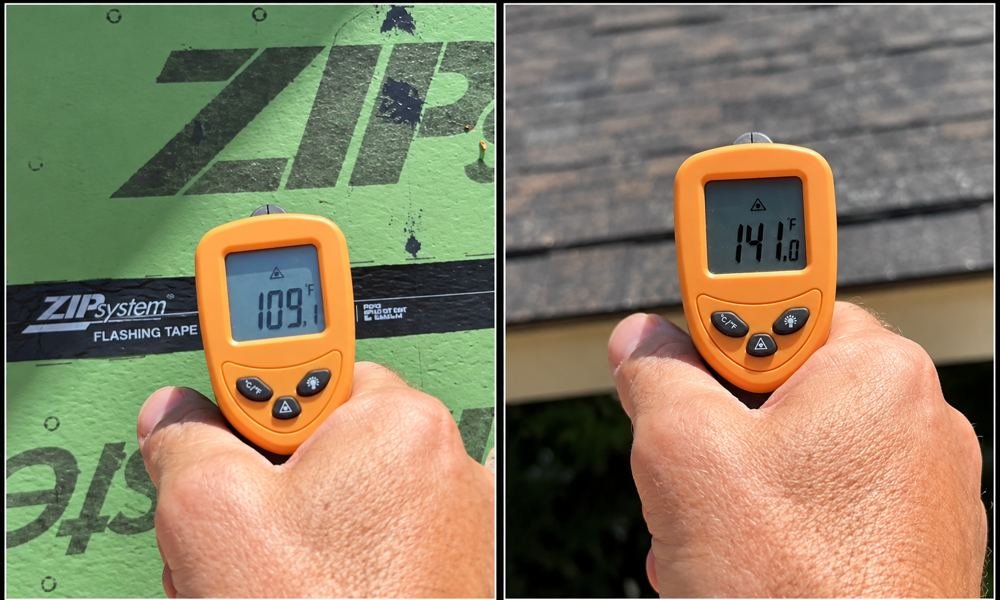
Outside: the ZIP wall in the sun reads 109.1 degrees. The shingles read 141.0 degrees.
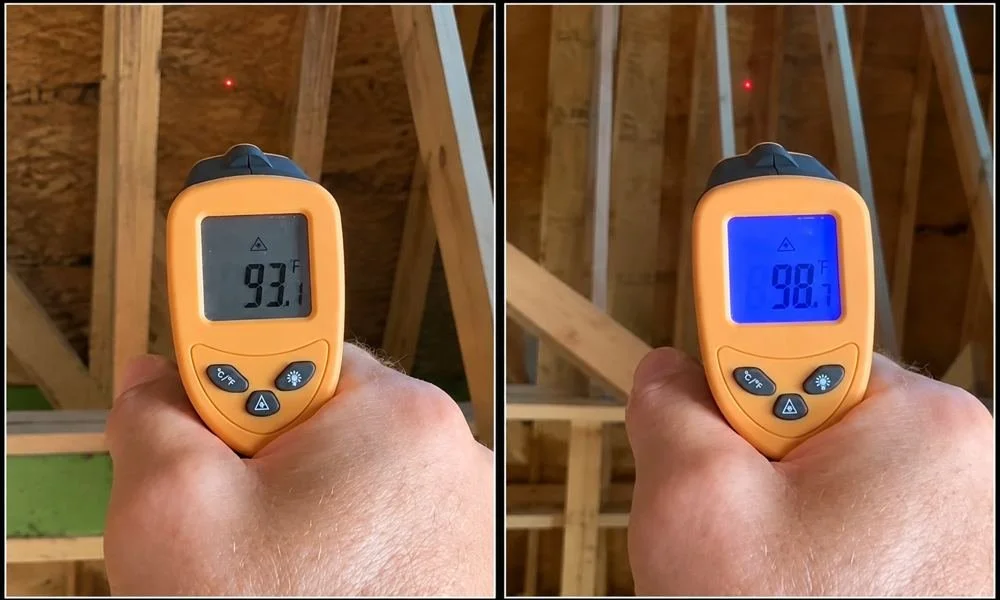
Inside, under the Roof Lung: the bottom of the sheathing reads 93.1 and 98.7 degrees.
Where to Go From Here
Every roof is different. I've never done two the same. Whether your utility bill is $200 or $2,000 a month, you can't budget for what it will be in 30 years. So here's how I can help.
Learn it yourself. Both of my Field Guides explain hot roofs, cold roofs and the Roof Lung, with photos from real jobs. Building new? The Super Energy-Efficient & Healthy Home Field Guide. Fixing a roof that already failed? The Retrofit & Remodel Field Guide, The NightMare. Buy what you can afford.
Talk it through with me. Bring your photos and your questions, and we'll read your roof together. See consulting.
Join Carbonless. Members work through problems like this together every other week at the Carbonless Roundtable. Read about membership.
Questions? Email me at hello@carbonless.org. I answer every message myself.