
 Image 1 of 2
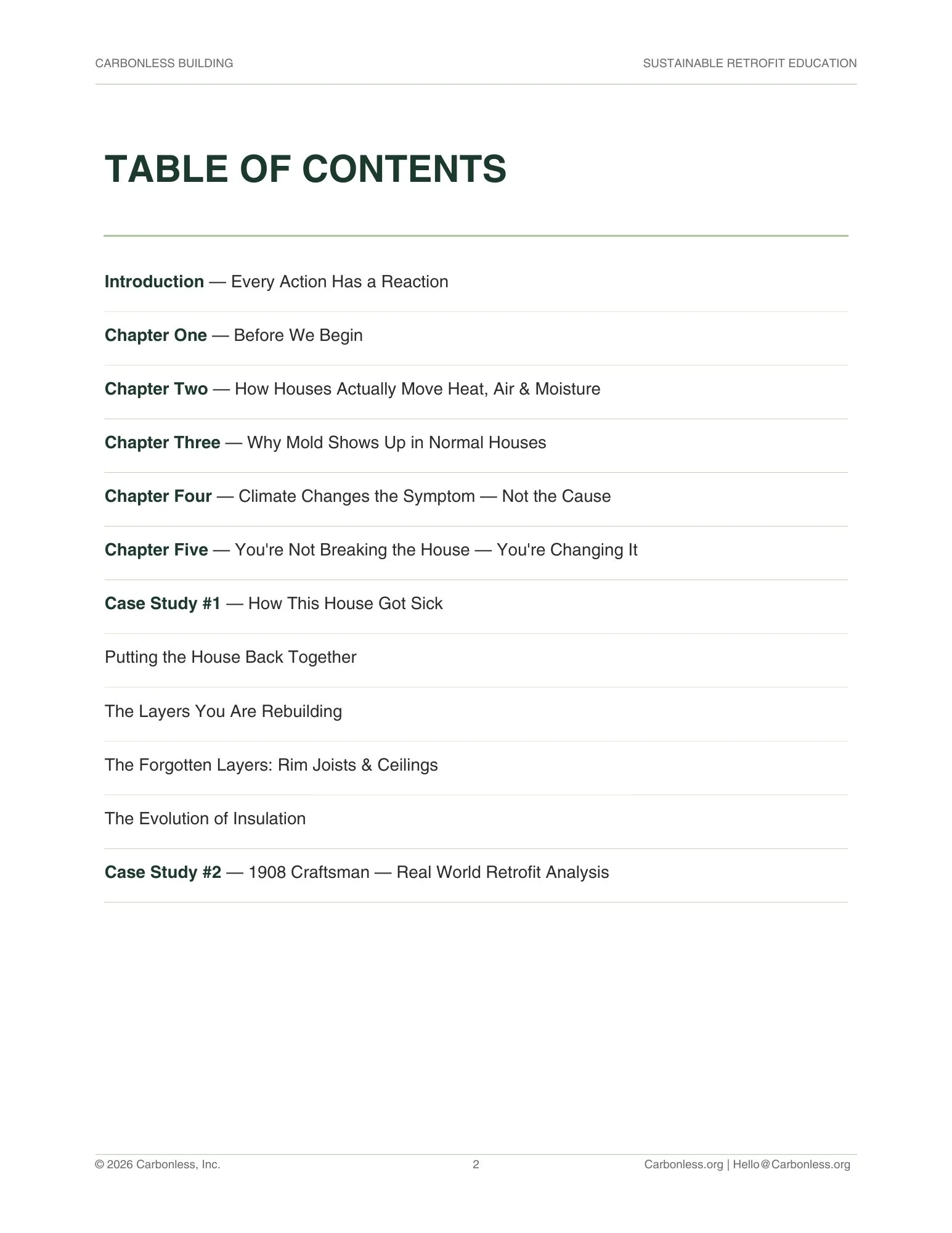 Image 2 of 2
You didn’t build this house. But you’re the one living with what it got wrong.
Maybe it’s a mold problem that keeps coming back. Maybe it’s an energy bill that never made sense no matter what you’ve replaced. Maybe you’re about to renovate and you’re scared — because you’ve heard enough horror stories to know that adding insulation in the wrong place can make things worse, not better.
That fear is legitimate. And it’s exactly why this guide exists.
Most retrofit problems aren’t mistakes. They’re predictable reactions to changing how an existing house handles heat, air, and moisture. Good intentions — adding insulation, sealing leaks, upgrading windows and systems — can trap moisture, create cold surfaces, or produce mold where it never appeared before. Not because you did something wrong. Because nobody explained the physics before the walls closed in.
This guide explains the physics. Before the walls close in.
Built for Real Houses. Not New Construction Theory.
Brian Iverson has spent fifty years diagnosing what goes wrong in existing buildings. Not theoretical buildings. Real ones — with 1908 Craftsman bones, mid-century assemblies, decades of well-meaning upgrades layered on top of each other, and moisture stories nobody ever told the homeowner.
This guide is built around the 2126 Rule — a framework for retrofitting assemblies that dry properly, recover from mistakes, surface problems early, and hold up for generations. Not code minimum. Not perfection. Durable, forgiving, honest construction that lets you close walls with confidence.
At $49, it is the most affordable entry point into the Carbonless education system — and for many homeowners and remodelers, it is the only guide they will ever need.
What’s Inside
How buildings actually move heat, air, and moisture — and why cold surfaces are always the first place trouble starts, not the last.
Why mold appears in otherwise normal houses — almost always condensation, not leaks. Understanding this changes everything about how you approach a renovation.
Why climate reveals problems — it doesn’t create them — your house had the problem before the cold snap. The cold snap just made it visible.
You’re not breaking the house — you’re changing it — how to anticipate what changes when you improve an assembly, and how to choose reactions that solve the problem permanently.
Practical rebuild strategies — flash-and-batt, smart membranes, exterior insulation, and more. Real options for real budgets and real existing structures.
Forgotten edges — rim joists, ceilings, and why they often need attention before anything else. The places no one looks until something goes wrong.
The evolution of insulation — and why older, more forgiving houses can struggle when modern materials are added without understanding the moisture story they’re interrupting.
Two Real-World Case Studies
Case Study #1 — How This House Got Sick
A mid-20th-century assembly dissected layer by layer. What went wrong, why it went wrong, and how physics-first fixes prevent it from ever coming back.
Case Study #2 — 1908 Craftsman
Thermal imaging analysis of energy loss and retrofit gaps in a century-old house. What the images revealed, what they meant, and what to do about it.
Resilience Over Perfection
This is not a guide about achieving the perfect assembly. It’s a guide about understanding your house well enough to make it durable, healthy, and forgiving — on a real budget, in a real climate, without starting over from scratch.
Slow down. Understand the moisture story. Close the walls with confidence.
You didn’t build this house. But you’re the one living with what it got wrong.
Maybe it’s a mold problem that keeps coming back. Maybe it’s an energy bill that never made sense no matter what you’ve replaced. Maybe you’re about to renovate and you’re scared — because you’ve heard enough horror stories to know that adding insulation in the wrong place can make things worse, not better.
That fear is legitimate. And it’s exactly why this guide exists.
Most retrofit problems aren’t mistakes. They’re predictable reactions to changing how an existing house handles heat, air, and moisture. Good intentions — adding insulation, sealing leaks, upgrading windows and systems — can trap moisture, create cold surfaces, or produce mold where it never appeared before. Not because you did something wrong. Because nobody explained the physics before the walls closed in.
This guide explains the physics. Before the walls close in.
Built for Real Houses. Not New Construction Theory.
Brian Iverson has spent fifty years diagnosing what goes wrong in existing buildings. Not theoretical buildings. Real ones — with 1908 Craftsman bones, mid-century assemblies, decades of well-meaning upgrades layered on top of each other, and moisture stories nobody ever told the homeowner.
This guide is built around the 2126 Rule — a framework for retrofitting assemblies that dry properly, recover from mistakes, surface problems early, and hold up for generations. Not code minimum. Not perfection. Durable, forgiving, honest construction that lets you close walls with confidence.
At $49, it is the most affordable entry point into the Carbonless education system — and for many homeowners and remodelers, it is the only guide they will ever need.
What’s Inside
How buildings actually move heat, air, and moisture — and why cold surfaces are always the first place trouble starts, not the last.
Why mold appears in otherwise normal houses — almost always condensation, not leaks. Understanding this changes everything about how you approach a renovation.
Why climate reveals problems — it doesn’t create them — your house had the problem before the cold snap. The cold snap just made it visible.
You’re not breaking the house — you’re changing it — how to anticipate what changes when you improve an assembly, and how to choose reactions that solve the problem permanently.
Practical rebuild strategies — flash-and-batt, smart membranes, exterior insulation, and more. Real options for real budgets and real existing structures.
Forgotten edges — rim joists, ceilings, and why they often need attention before anything else. The places no one looks until something goes wrong.
The evolution of insulation — and why older, more forgiving houses can struggle when modern materials are added without understanding the moisture story they’re interrupting.
Two Real-World Case Studies
Case Study #1 — How This House Got Sick
A mid-20th-century assembly dissected layer by layer. What went wrong, why it went wrong, and how physics-first fixes prevent it from ever coming back.
Case Study #2 — 1908 Craftsman
Thermal imaging analysis of energy loss and retrofit gaps in a century-old house. What the images revealed, what they meant, and what to do about it.
Resilience Over Perfection
This is not a guide about achieving the perfect assembly. It’s a guide about understanding your house well enough to make it durable, healthy, and forgiving — on a real budget, in a real climate, without starting over from scratch.
Slow down. Understand the moisture story. Close the walls with confidence.